Websites for interior designers and architects: portfolios that bring the right enquiries
The short answer
A portfolio website for an interior designer or architect should do more than show beautiful rooms. It should explain how the studio thinks, write each project as a brief, constraints and decisions, and qualify enquiries with a few honest questions. Buyers in Hyderabad, Dubai and the UK ask different things first, so the site should answer each market's questions plainly.
On this page
- The short answer
- What should an interior design or architecture website actually do?
- How should a project page be written?
- Can a website show scope, not just style?
- How do buyers differ in Hyderabad, Dubai and the UK?
- How do you qualify enquiries without putting people off?
- How do search and AI assistants find design studios?
- What to do next
- What to take away
- Questions, answered
Most interior design and architecture websites look alike: a large hero image, a grid of projects, an about page, a contact form. They are often beautiful. They are also often quiet, or busy with the wrong enquiries: people wanting a single sofa sourced, or a full villa designed on a budget meant for one room.
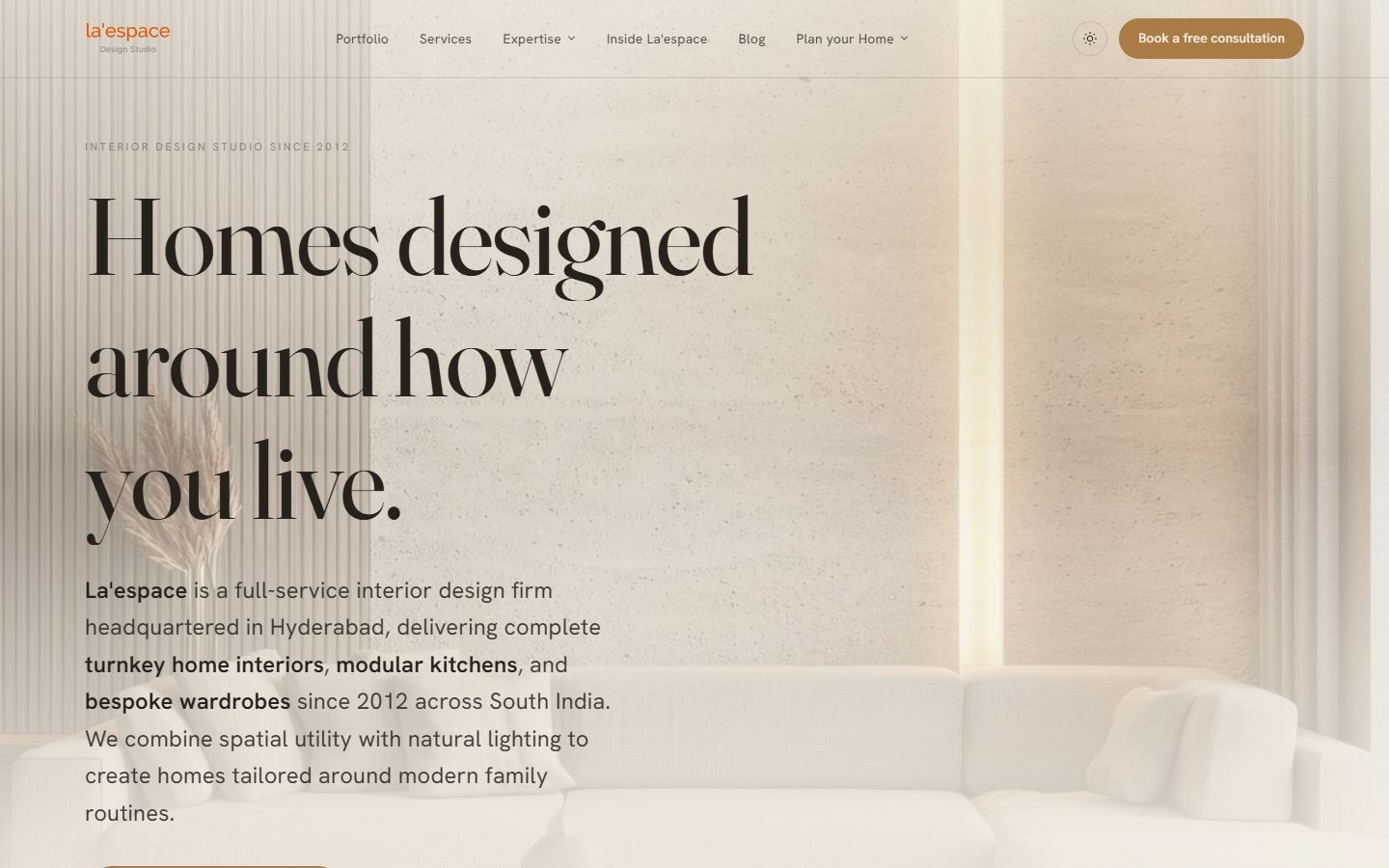
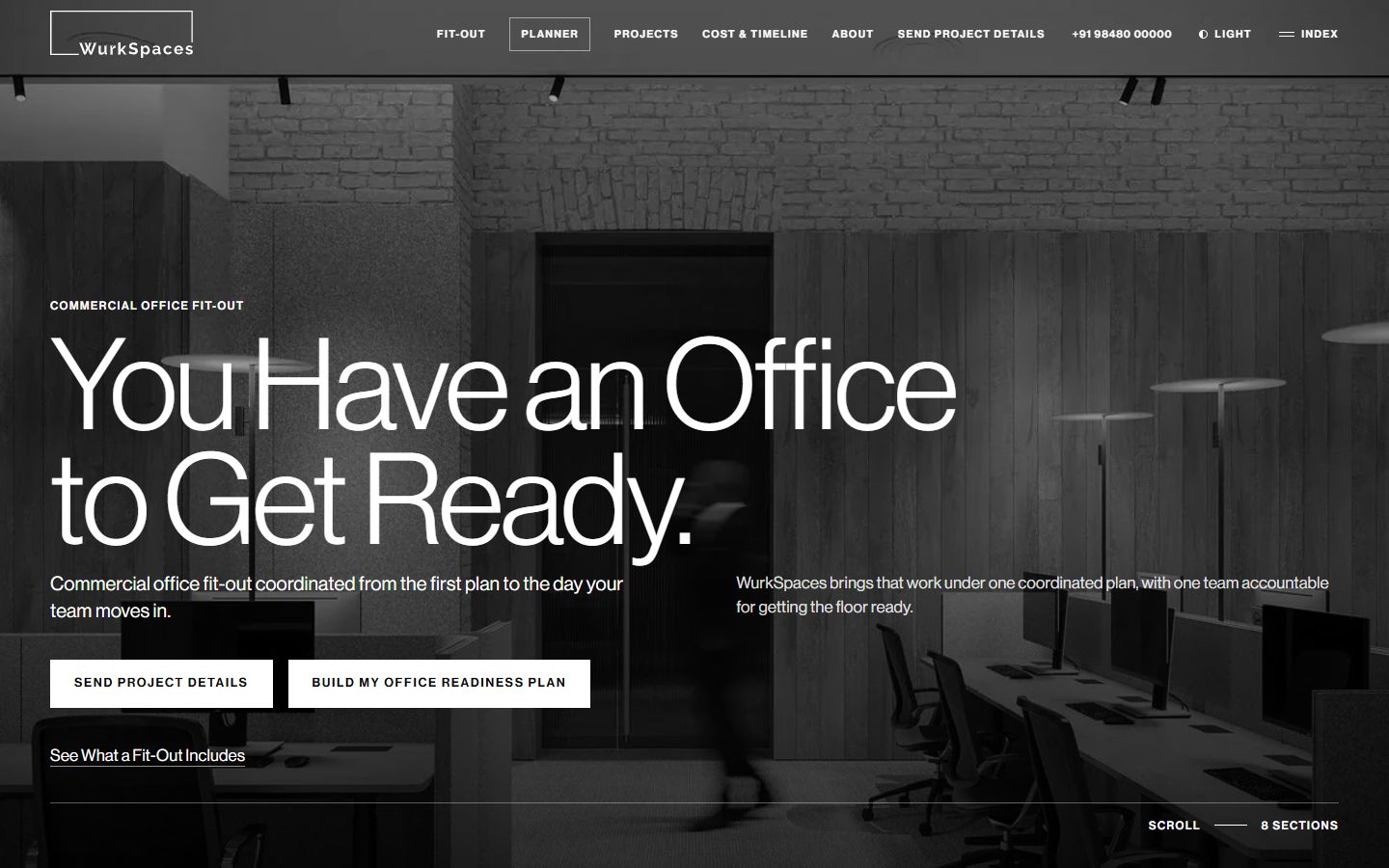
The portfolio is not the problem. The problem is that it shows the result without the reasoning. This playbook explains how studios in Hyderabad, Dubai and the UK can build portfolio websites that bring the right enquiries, drawing on sites we have built for LaEspace, an interior design studio that designs complete homes, and WurkSpaces, a commercial fit-out contractor.
What should an interior design or architecture website actually do?
It should help the right client recognise themselves and help the wrong one leave politely. That means saying what the studio designs, for whom and where, explaining how it thinks, and showing work that proves it. A beautiful gallery is necessary but not sufficient; the words around it decide who enquires.
Start with a point of view a buyer can test. The LaEspace site opens on "Homes designed around how you live." and follows it with "Good rooms start with light, not furniture." A homeowner can check that against their own home. Those who agree arrive at a consultation already aligned. We explain the thinking in our LaEspace case study.
Then say plainly what you do. LaEspace's first paragraph names turnkey home interiors, modular kitchens and bespoke wardrobes, and the region it serves. A visitor knows within seconds whether they are in the right place.
How should a project page be written?
A project page should read as a short case: the brief, the constraints, the decisions and the result. Photographs carry the result. The words carry everything else, which is what a future client needs to judge whether you can solve their problem. Without them, a project page is a mood board.
Anatomy of a project page that qualifies enquiries
From the bottom layer up:
- The brief: Who the client was and what they needed
- The constraints: Budget band, site, timing, approvals
- The decisions: Three choices and why you made them
- The result: Real photographs, captioned
- The next step: Your consultation action, same label everywhere
Here is why this matters, in one passage. A future client is not really asking whether your rooms are beautiful; they can see that. They are asking whether you can handle a problem like theirs: a north-facing flat with little light, a villa with a family of six, an office that must stay open during works. A project page that names the brief and the constraints lets them match their problem to yours. A page that explains three decisions, such as moving a kitchen to catch the morning light or choosing a material for a humid climate, shows judgement. Judgement is what they are hiring. Captions on photographs do the same job at a smaller scale: one line per image saying what was decided, not what the room is called.
Fewer, better projects beat many thin ones. Six to ten well-written project pages that represent the work you want more of will do more than a grid of forty.
Can a website show scope, not just style?
Yes, and for complex projects it should. Fit-out and full-home projects involve many systems a client never sees: cabling, air conditioning, lighting control, fire safety. Showing where those sit makes your scope visible and explains your fee. An image with numbered markers, or a plain list beside each project, both work.
The WurkSpaces site does this with an interactive floor where eight building systems light up one by one, from furniture and interiors to security, fire safety and signage. The same idea scales down for a residential studio: a project page that lists what was in scope, from false ceilings to modular kitchens to lighting, tells a buyer what a turnkey project means. Read the WurkSpaces case study.
How do buyers differ in Hyderabad, Dubai and the UK?
Each market asks a different first question. Hyderabad homeowners often ask about turnkey scope and timelines for a new apartment. Dubai clients ask about approvals, handover dates and whether you work in their community. UK clients ask about planning, credentials and how fees work. Answer each market's first question on the pages that market will read.
First questions, by market
- Hyderabad: Turnkey scope for new apartments and villas, modular kitchens, timelines, often owners abroad overseeing remotely
- Dubai and the UAE: Building and community approvals, handover dates, Arabic and English, WhatsApp first
- UK and London: Planning and permitted works, protected titles, fee structure, accessibility and UK GDPR
Hyderabad. Many projects begin when a new apartment is handed over in areas such as Kokapet, Narsingi, Tellapur or Gachibowli. Owners compare turnkey offers and want to know what is included. Some live abroad and manage the project remotely, so clear stages and regular photo updates matter. Some ask about Vastu; if you work with it, say so. See our notes on Hyderabad.
Dubai. Clients are often expatriates and many first contact a studio on WhatsApp. Villa and apartment fit-outs usually need approvals from the building or master developer and the relevant authority, so explain that you handle them, or that you do not. Arabic and English matter for a studio wanting both audiences. Our Dubai business website guide and Dubai location page cover the wider picture.
UK. "Architect" is a protected title under the Architects Act 1997, usable only by people registered with the Architects Registration Board, so wording matters. Homeowners ask about planning permission, conservation areas and how fees are charged. Enquiry forms fall under UK GDPR, and accessible design is expected. Our guide to launching a UK service business website covers the basics; take legal advice on specifics.
How do you qualify enquiries without putting people off?
Ask a few honest questions that help you prepare, and say why you ask. Property type, location, the stage the project is at and rough timing are enough. A budget band is useful if framed as helping you suggest the right scope. Keep the form short and offer WhatsApp or a call as an alternative.
Qualification is a courtesy, not a gate. A client who reads that you work on complete homes, sees a fee structure explained, and is asked when their handover is due feels understood, not filtered. The ones who are not a fit learn that early, which saves both sides a meeting.
How do search and AI assistants find design studios?
Through clear text, accurate profiles and fast images. Write project pages that name the location and project type in plain words, keep your Google Business Profile current, and describe each image in its alt text. AI assistants quote text, not photographs, so a portfolio with no words is invisible to them.
Many design clients first find a studio on Instagram, Pinterest or a directory such as Houzz, then visit the website to check whether the studio is real and serious. The website is where that check happens, so it must agree with every profile: the same name, the same areas served, the same projects described the same way. Inconsistency reads as carelessness.
Location matters for search too. A studio that names the areas it works in, with a short page for each market it serves, is easier to find for searches such as interior designer in Jubilee Hills, villa fit-out in Dubai Hills or architect in Islington. Each page should carry real projects from that area where possible.
Large images are the main speed risk on design sites. Serve modern formats at sensible sizes and load images below the first screen only when needed. A portfolio that takes too long to appear on a phone is a portfolio nobody sees.
What to do next
Pick your three best projects and rewrite each as brief, constraints, decisions and result. Then check your enquiry form asks only what you genuinely need.
If you would like help, see how we build websites and platforms and search and AI visibility, browse our work, or book a call. We work with studios in Hyderabad, Dubai and the UK.
What to take away
- Lead with a point of view a client can test, then show the work that proves it.
- Write each project page as brief, constraints, decisions and result, not a photo dump.
- Qualify enquiries with property type, location, stage and timing, asked politely.
- Hyderabad, Dubai and UK buyers ask different first questions; answer each plainly.
- Large images must still load fast on a phone, or the portfolio is never seen.
Built on Intent studio. A founder-led studio in India that plans and builds websites, search and AI visibility, and AI systems for businesses in India, the UAE and the UK. Reviewed by [Founder name], founder. We do not publish invented numbers; where a figure appears, its source is named in the sentence.
How the studio works