Case study: LaEspace, a website for a studio that designs complete homes
The short answer
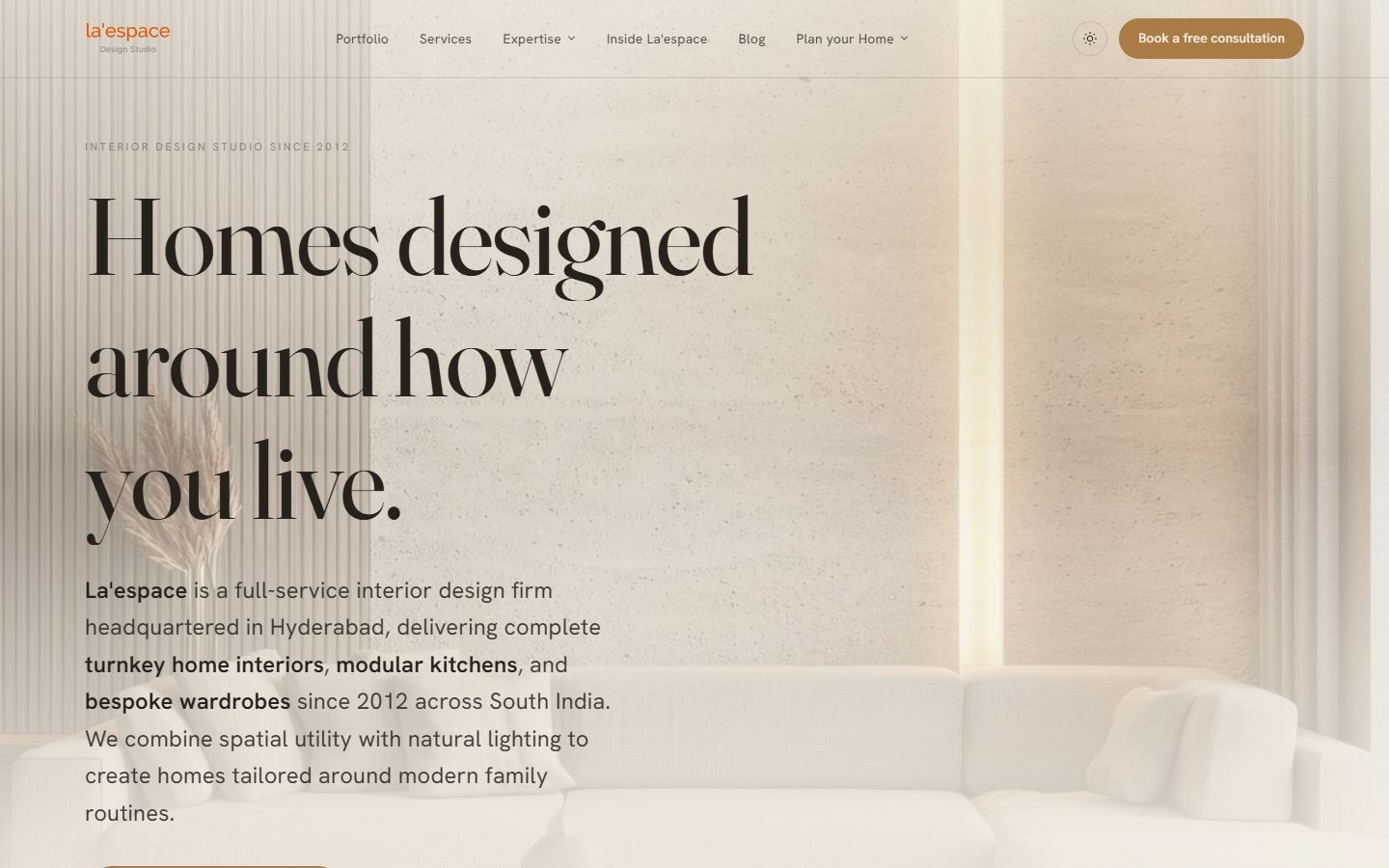
LaEspace is an interior design studio in Hyderabad that designs complete homes. The website opens on one large line, 'Homes designed around how you live.', explains a philosophy that starts with light rather than furniture, and keeps a free consultation one tap away on every screen. It is the flagship project of our build studio; scope, timeline and results are [Confirm].
On this page
- The short answer
- At a glance
- What did the LaEspace website need to do?
- How does the home page make its argument?
- Why lead with a philosophy instead of a portfolio?
- How is the site organised for a homeowner?
- How does the site work on a phone?
- Why does this case study stop where the captured pages stop?
- How does LaEspace relate to WurkSpaces?
- What can other design studios take from LaEspace?
- What to do next
- What to take away
- Questions, answered
People rarely hire an interior designer for a single room. They hire one because they are moving, renovating or finally building the home they have been planning for years. The decision is large, personal and slow. A website that only shows pretty rooms answers the wrong question.
LaEspace is an interior design studio in Hyderabad that designs complete homes. It is the flagship project of our build studio. This case study describes only what the captured pages of the live site show; anything beyond them is marked [Confirm scope]. You can see the summary on our LaEspace work page.
At a glance
- Client: LaEspace, architecture and interior design, Hyderabad
- What is visible on the captured pages: an editorial home page, a philosophy section that starts with light, a light and dark switch, a consultation button in the header and hero, a calm mobile layout
- Platform: [Confirm scope]
- Scope and timeline: [Confirm]
- Results: [Confirm with the client]
What did the LaEspace website need to do?
As the site reads today, its job is to sell a complete home, not a room. It needs to show a homeowner how the studio thinks before showing what it has made, so that the people who book a consultation already share its approach. The exact brief is [Confirm the brief]; the pages themselves make the intent clear.
The first screen carries a small label, interior design studio since 2012, and then one line set very large: "Homes designed around how you live." Beneath it, a short paragraph says what the studio is in plain terms: a full-service interior design firm headquartered in Hyderabad, delivering turnkey home interiors, modular kitchens and bespoke wardrobes across South India. The paragraph ends on the idea that matters most, homes tailored around modern family routines.
That is a complete answer to the question a visitor arrives with. Who are you, what do you do, where, and why should I care. It takes about fifteen seconds to read.
How does the home page make its argument?
The home page moves from a promise to a method. It opens on how you live, then explains how the studio thinks, then names the three things it designs with. Each step is one idea, set large, with generous space around it. The visitor is never asked to absorb a grid of services before they understand the point of view.
The LaEspace home page, first three steps
- The promise: Homes designed around how you live
- How we think: Good rooms start with light, not furniture
- The materials: Light. Material. Comfort.
- The next step: Book a free consultation
Below the hero, a quiet prompt invites the visitor to scroll and see how the studio works. The first numbered section, How we think, opens with "Good rooms start with light, not furniture." The paragraph beneath explains the method in domestic detail: studying how sunlight moves through a home, where the morning reaches the kitchen, how the living room feels in the evening, which corner stays soft all day. Layout, storage and materials follow from that.
Then three words, set in italic: Light. Material. Comfort.
Why lead with a philosophy instead of a portfolio?
A philosophy lets the right clients recognise themselves before they see a single project. Anyone can show attractive rooms; few studios can say how they decide. A homeowner who reads that rooms start with light, and agrees, arrives at the consultation already aligned. One who disagrees has saved everyone a meeting.
This passage is the heart of the case study, so it is worth stating plainly. Interior design is bought on trust, and trust comes from understanding how someone works. A portfolio shows outcomes but hides the reasoning, and in a city like Hyderabad, where homeowners in Gachibowli, Kokapet or Jubilee Hills may be comparing several studios with similar galleries, reasoning is what separates them. "Good rooms start with light" is a claim a buyer can test against their own home: which rooms feel right, and at what time of day. It turns a style preference into a method. That is what a point of view does on a website, and it is why the site spends its most valuable space on one idea rather than twenty thumbnails.
The portfolio still matters, and it sits one click away in the main navigation.
How is the site organised for a homeowner?
The navigation follows the order of a homeowner's questions: Portfolio, Services, Expertise, Inside La'espace, Blog and Plan your Home. Expertise and Plan your Home open into further options. One action, Book a free consultation, sits in the header on every screen and repeats in the hero with the same label.
Using one label everywhere is a deliberate choice. A homeowner deciding whether to call should not have to wonder whether "Enquire", "Get a quote" and "Book a visit" lead to different things. One label, one action, one expectation.
A small switch in the header changes the site between light and dark. For a studio whose philosophy begins with light, it is a fitting detail, and it respects visitors who browse in the evening, which is when many families sit down together to talk about a home.
How does the site work on a phone?
On a phone, the editorial type holds its rhythm. The large line breaks across four lines and stays readable, the introductory paragraph keeps its bold service names, and the consultation button sits directly beneath it. The menu folds into a single control beside the light and dark switch. Nothing is cropped away to fit.
Many homeowners in Hyderabad first meet a studio through a link shared on WhatsApp or an Instagram profile, and they open it on a phone. A mobile layout that keeps the same argument in the same order is the difference between a visitor who reads the philosophy and one who closes the tab.
Why does this case study stop where the captured pages stop?
Because we describe only what we can show. Our captures of the live site cover the opening screen and the first philosophy section, on desktop and on a phone. The remaining sections, the full scope of the build and its results are marked [Confirm] until they are verified, rather than filled in from memory.
That restraint is the same rule we ask clients to follow. A case study that lists features nobody can see, or quotes enquiry growth nobody has measured, teaches readers to discount the whole page. A shorter case study that is entirely true teaches them the opposite. When the remaining sections are confirmed, this page will grow to cover them: the portfolio pages, the services and expertise sections, the home planning section and the blog. Until then, the honest description is the one above, and the live site is one click away for anyone who wants to see more.
How does LaEspace relate to WurkSpaces?
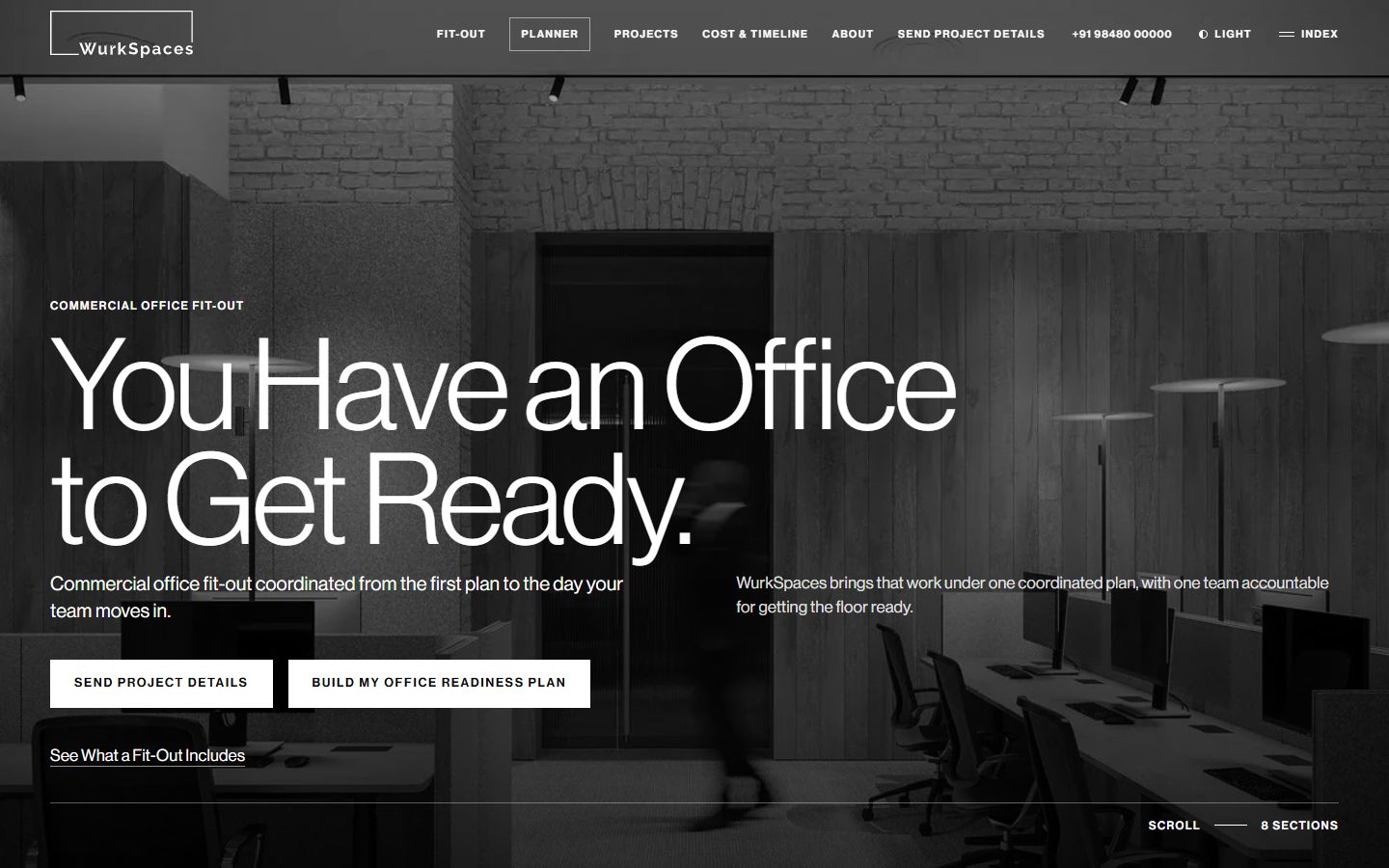
The commercial fit-out brand WurkSpaces, which we also built, states on its own site that it grew from the delivery experience of the same Hyderabad studio. The two sites serve different buyers, homeowners and office owners, so they make different arguments. Read our WurkSpaces case study to compare them.
What can other design studios take from LaEspace?
Write your method as one sentence a client can test, and put it above your portfolio. Use one consultation label everywhere. Make the mobile version carry the same argument in the same order. For the full sector playbook, read websites for interior designers and architects.
What to do next
Look at your own home page and ask whether a visitor learns how you think before they see what you have made. If not, write that one sentence first.
If you would like help, see how we build websites and platforms and how we approach search and AI visibility, browse our work, or book a call. We work with studios across Hyderabad, the UAE and the UK.
What to take away
- The site sells a complete home, not a room, and the copy says so from the first line.
- The philosophy section starts with light, which gives the studio a point of view buyers can test.
- One consultation action sits in the header and the hero, with the same label in both places.
- This case study describes only what the captured pages show; everything else stays [Confirm].
Built on Intent studio. A founder-led studio in India that plans and builds websites, search and AI visibility, and AI systems for businesses in India, the UAE and the UK. Reviewed by [Founder name], founder. We do not publish invented numbers; where a figure appears, its source is named in the sentence.
How the studio works