Clinic and wellness websites in India: trust, bookings and local search
The short answer
A clinic or wellness website in India has three jobs: earn trust with named, qualified practitioners and careful claims; make booking easy by form, phone or WhatsApp; and appear in local search for the neighbourhoods patients live in. Health content is held to a higher standard by Google, so accuracy and credentials matter more here than anywhere else.
On this page
- The short answer
- Why is a clinic website held to a higher standard?
- What builds trust on a clinic or wellness website?
- What should a treatment or service page include?
- How should bookings work on an Indian clinic website?
- How do clinics win local search in Hyderabad and Mumbai?
- What about wellness brands that sell online?
- What to do next
- What to take away
- Questions, answered
A patient looking for a dermatologist in Jubilee Hills or a physiotherapist near Andheri is rarely browsing for fun. They have a problem, often a worry, and they want to know three things quickly: is this place trustworthy, can I get an appointment, and is it near me. A clinic website that answers those three questions gets the booking. One that leads with a stock photo of a smiling doctor and a paragraph about compassionate care usually does not.
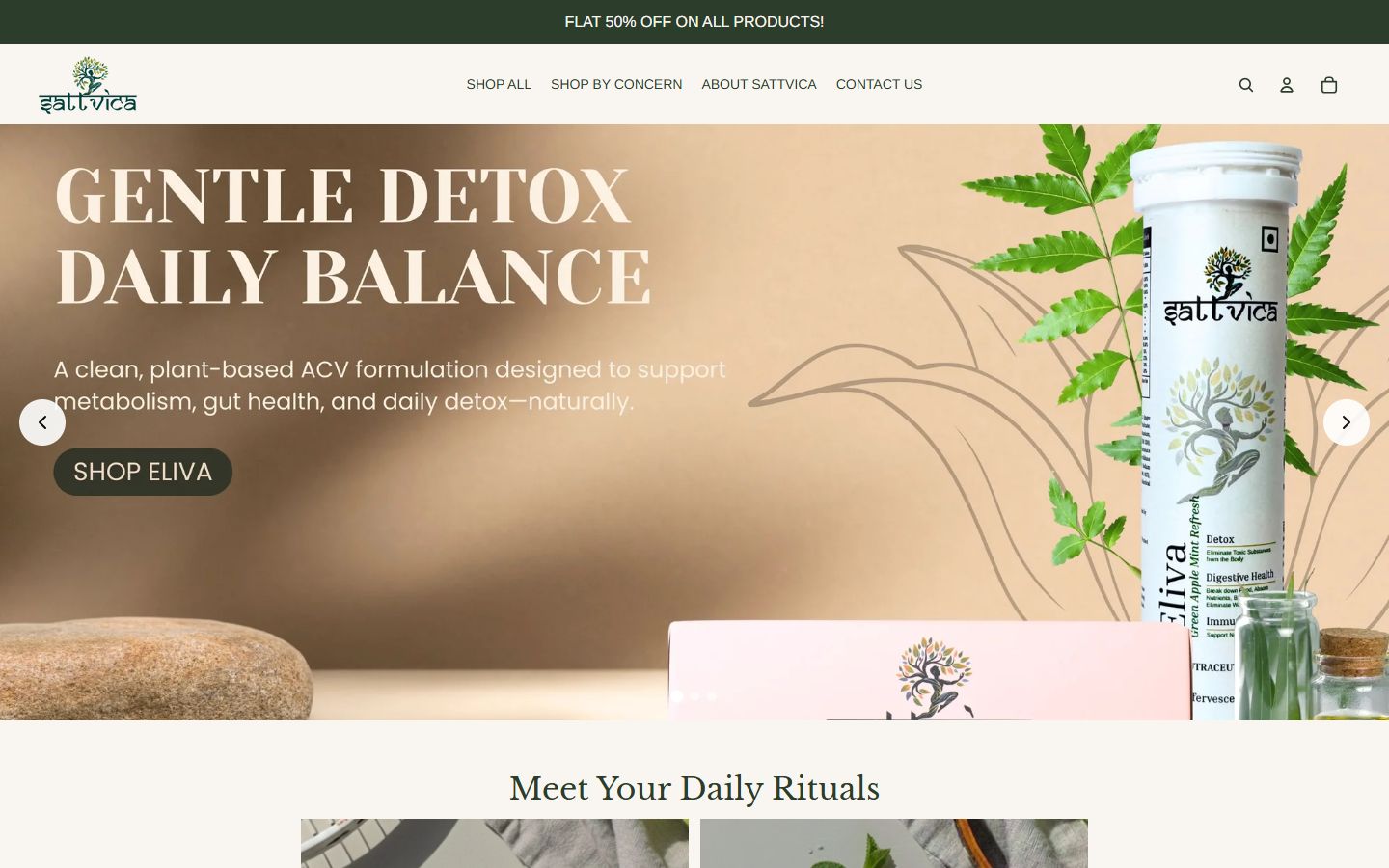
This playbook covers clinics, diagnostic centres and wellness businesses across India, with notes from Hyderabad and Mumbai. It draws on work our studio has done in wellness and health, including Sattvica, a wellness and lifestyle brand, Trilok Akhada in wellness and fitness, and Health Inside IT in health tech.
Why is a clinic website held to a higher standard?
Because health information can affect people's wellbeing, Google applies stricter quality expectations to it. Its own quality rater guidelines treat health as a "Your Money or Your Life" topic, where experience, expertise and trustworthiness matter most. In practice, a clinic website must show who wrote and reviewed its content, and why they are qualified.
That changes how you write. A treatment page should name the practitioner who provides it, state their qualifications, and carry a date showing when it was last reviewed. Claims should be specific and modest. "Our physiotherapists assess posture and movement before any treatment plan" is better than "we cure back pain", which is both unverifiable and, depending on the condition, potentially problematic.
India also has rules on how medical services are promoted. Professional conduct regulations for registered medical practitioners restrict self-promotion, and the Drugs and Magic Remedies (Objectionable Advertisements) Act, 1954 prohibits advertising remedies with claims to cure certain listed conditions. Wellness and AYUSH businesses have their own considerations. The rules are specific and change, so take legal advice before publishing claims, testimonials or before-and-after images.
What builds trust on a clinic or wellness website?
Trust comes from people, specifics and honesty. Named practitioners with qualifications, real photographs of the clinic, clear opening hours, a visible address and phone, and plain explanations of what happens at a first visit all build it. Generic claims, stock images presented as your team and vague promises erode it.
Layers of trust on a clinic website
From the bottom layer up:
- Basics: Address, hours, phone, map, registration details
- People: Named practitioners with qualifications
- Clarity: What happens at a first visit, what it costs
- Careful content: Reviewed, dated, modest claims
- Responsiveness: Bookings confirmed quickly, questions answered
This is the passage we would ask every clinic owner to read. Patients do not choose a clinic because its website says it is caring. They choose it because the website lets them check things: that a named doctor with stated qualifications practises there, that the clinic is open on Saturday morning, that a first consultation includes an assessment and roughly what it costs, that there is parking or a metro station nearby. Each checkable fact removes a reason to hesitate. Each vague adjective adds one. The most effective clinic websites we see read almost like a well-organised reception desk: calm, specific, and ready with the answer before the patient has to ask. Evidence, not adjectives, applies with more force in health than in any other sector.
What should a treatment or service page include?
Each treatment or service deserves its own page with one job: helping a patient decide whether to book it. Say what it is, who it suits, what happens during a visit, how long it takes, who provides it, and how to book. Answer the questions patients ask at reception, in the order they ask them.
A useful template, which we adapt for each clinic:
- A plain definition. One or two sentences: what the treatment is, in words a patient would use.
- Who it is for. The situations in which a patient might consider it, and when they should see a doctor first.
- What to expect. Preparation, the visit itself, duration and aftercare, step by step.
- Who provides it. The named practitioner, with qualifications, linked to their profile.
- Cost guidance. A starting fee or a clear statement of what affects the cost, where the clinic is comfortable sharing it.
- Common questions. Four or five real questions from patients, answered briefly.
- Review date. When the page was last checked, and by whom.
Pages written this way are also easier for Google and AI assistants to understand and quote accurately, because each one answers a single question clearly. A clinic with fifteen focused treatment pages will usually be found for more searches than one with a single long services page.
How should bookings work on an Indian clinic website?
Offer the routes patients actually use: an online form or booking tool, a phone number, and WhatsApp. Confirm every booking promptly in writing, send a reminder before the appointment, and make rescheduling easy. Keep WhatsApp for scheduling and simple questions rather than detailed medical history.
From local search to a confirmed appointment
- Search: Treatment plus neighbourhood, often on a phone
- Profile: Google Business Profile with hours and reviews
- Page: Treatment or location page with a named practitioner
- Book: Form, phone or WhatsApp
- Confirm: Written confirmation and a reminder
WhatsApp-first enquiries are normal across India. A clinic that shows its WhatsApp number with reply hours meets patients where they already are. If volume grows, routine questions such as timings, directions and availability can be answered automatically, with anything clinical passed to a person. We explain where that line sits in WhatsApp AI reception. Any automated answer should come only from the clinic's own approved content, never improvised; see why a website chatbot should only answer from your own content.
Ask only for the information needed to book. Name, phone and preferred time are usually enough. Do not collect medical history through a general contact form. India's Digital Personal Data Protection Act, 2023 sets obligations for handling personal data, so take advice on consent wording and storage.
How do clinics win local search in Hyderabad and Mumbai?
Local search depends on distance, relevance and prominence. Give each branch its own Google Business Profile and its own page on the website, naming the neighbourhood and the services offered there. Keep name, address and phone identical everywhere, encourage genuine reviews, and answer them.
Patients search by neighbourhood. In Hyderabad that might be Banjara Hills, Kondapur or Madhapur; in Mumbai, Bandra, Powai or Andheri. A multi-branch clinic with one generic contact page loses to a single-branch clinic with a clear page for its area. Our guide to local SEO in Hyderabad covers profiles, categories and reviews in detail, and our notes on Hyderabad and Maharashtra cover each market.
For older sites, a redesign can lose rankings if page addresses change carelessly. If your clinic site in Mumbai or Pune needs updating, read modernising a Mumbai or Pune website without losing rankings first.
What about wellness brands that sell online?
Wellness brands that sell products face the same trust test with an extra layer: product claims. Organise products by the need a customer describes, explain ingredients plainly, and avoid medical claims you cannot support. The Sattvica site, for example, lets visitors shop by concern, which matches how people actually look for wellness products.
Product pages should state what a product contains and how to use it, rather than what it will cure. Customer reviews help, but moderate them for claims you could not make yourself.
Wellness studios and fitness centres sit between the two. They take bookings like a clinic and often sell memberships or products like a shop. The same rules apply: name the people who teach or treat, explain what a first session involves, show timetables that are kept current, and make the booking route obvious on a phone.
What to do next
Read your three most visited pages as a worried patient would. Underline every claim and ask whether a practitioner would sign it. Check each branch has its own profile and page.
When you are ready, see how we build websites and platforms, search and AI visibility and AI systems and automation for businesses across India, or book a call.
What to take away
- Health pages are judged more strictly, so name practitioners, show qualifications and date your content.
- Make claims carefully; Indian rules restrict how medical services and remedies are advertised.
- Offer booking by form, phone and WhatsApp, and confirm every booking promptly.
- One page per location and an accurate Google Business Profile win neighbourhood searches.
- Collect the minimum personal data and take advice under the DPDP Act, 2023.
Built on Intent studio. A founder-led studio in India that plans and builds websites, search and AI visibility, and AI systems for businesses in India, the UAE and the UK. Reviewed by [Founder name], founder. We do not publish invented numbers; where a figure appears, its source is named in the sentence.
How the studio works