WhatsApp AI reception for Indian and UAE businesses: what to automate and what to keep human
The short answer
WhatsApp AI reception answers routine questions, collects the details a team needs and books or routes enquiries at any hour, using only information the business has approved. Automate greetings, FAQs, qualification and scheduling; keep pricing negotiations, complaints, sensitive matters and anything the AI is unsure about with a person.
On this page
- The short answer
- What is WhatsApp AI reception?
- What should a WhatsApp AI receptionist handle?
- What should stay human?
- How do you keep an AI receptionist accurate?
- What does it take to set up WhatsApp AI reception properly?
- How does this work for businesses in Hyderabad and Dubai?
- How does WhatsApp reception connect to the rest of your enquiry system?
- How do you know if WhatsApp AI reception is working?
- What to do next
- What to take away
- Questions, answered
In India and the UAE, many business conversations start on WhatsApp. A parent messages a school about admissions. A homeowner in Dubai sends a photo of a room to an interior studio. A patient asks a Hyderabad clinic whether the doctor is in on Saturday. Most of these arrive outside office hours, and many go unanswered until someone picks up the phone the next morning.
WhatsApp AI reception exists to close that gap. Done well, it answers quickly, gathers what your team needs and hands over cleanly. Done badly, it frustrates people and damages trust. The difference is in deciding, before building, what it should and should not do.
What is WhatsApp AI reception?
WhatsApp AI reception is an automated first responder on your business WhatsApp number. It greets each enquiry, answers common questions from information you have approved, asks the qualifying questions your team would ask, and then books, routes or hands the conversation to a person. It is a receptionist, not a salesperson or an adviser.
It typically runs on the WhatsApp Business Platform, connected to an AI model, your approved knowledge and your CRM or booking system. Every conversation is logged, so your team sees the full history when they take over.
What should a WhatsApp AI receptionist handle?
Automate the work that is repetitive, predictable and low risk: greetings, opening hours, location and directions, standard service information, document requests, qualifying questions, appointment booking and routing to the right person. These follow clear rules, and a fast, accurate answer is better than a slow human one.
A good starting list for most service businesses:
- Instant acknowledgement. Every message gets a reply in seconds, with a clear note of when a person will follow up if needed.
- Frequently asked questions. Timings, locations, services offered, eligibility, documents required, parking, languages spoken.
- Qualification. The questions your team always asks first, such as which service, which location, budget range or preferred date.
- Booking. Offering available slots for a site visit, consultation or counselling session, and confirming them.
- Routing. Sending a Gachibowli enquiry to the Gachibowli branch, or an Arabic-language conversation to an Arabic-speaking colleague.
- Sending approved material. A brochure, a fee sheet or a location pin, exactly as your team would send it.
A WhatsApp AI reception flow
- Message arrives: Any hour, any device
- Instant reply: Greeting and what happens next
- Answer and qualify: From approved content only
- Book or route: Slot offered or team notified
- Human follow-up: Full history in the CRM
What should stay human?
Keep anything that needs judgement, empathy or authority with a person: price negotiation, complaints, refunds, medical or legal questions, sensitive personal situations, and any case the AI is not confident about. The AI's job in these moments is to recognise them quickly and hand over gracefully.
This passage is the one we come back to in every planning session. An AI receptionist earns trust by knowing its limits. When a customer is upset, a fast but generic reply makes things worse; what they want is to feel heard by someone who can act. When a buyer asks for a discount, the answer depends on context only your team has. When a patient describes symptoms, a clinic should not let software give anything resembling advice. So the design question is not "how much can we automate?" but "where must a person take over, and how fast?" We write those handover rules down before building anything: the topics that always go to a person, the phrases that signal frustration, the confidence level below which the AI stops answering, and the response time the team commits to. Customers forgive an honest "a colleague will reply within the hour" far more readily than a confident wrong answer.
Automate or keep human
Automate:
- Greetings and acknowledgements
- Hours, locations and directions
- Standard service and fee information
- Qualifying questions
- Booking and reminders
- Sending approved brochures
Keep human:
- Price negotiation and discounts
- Complaints and refunds
- Medical, legal or financial questions
- Sensitive personal situations
- Unusual or high-value requests
- Anything the AI is unsure about
How do you keep an AI receptionist accurate?
Give it a narrow, approved knowledge base and instruct it to answer only from that content. If the answer is not there, it says so and hands over. Review conversations weekly, update the knowledge when questions repeat, and never let it invent prices, dates or promises.
This is the same principle behind a citation-grounded website chatbot: the AI's knowledge is your content, not the open internet. In practice that means:
- a short, owned document of approved answers, reviewed by someone senior,
- fees, dates and offers pulled from a single source that is kept current,
- a rule that anything outside that content triggers a handover,
- a weekly read-through of conversations to spot gaps and wrong answers.
What does it take to set up WhatsApp AI reception properly?
You need the WhatsApp Business Platform through Meta or an approved provider, a verified business profile, opt-in for outbound messages, approved message templates, a knowledge base, a connection to your CRM or calendar, and clear handover rules. Plan these before choosing tools.
A few rules shape the design. On the WhatsApp Business Platform, businesses can reply freely within a customer service window after the customer's last message; outside it, messages generally need to use templates approved by Meta. Customers should have opted in to receive messages from you. Check Meta's current policies when you set up, since they change.
Data protection matters too. If you handle personal data, India's Digital Personal Data Protection Act, 2023, and the UAE's Federal Decree-Law No. 45 of 2021 on personal data protection may apply. Tell people they are talking to an automated assistant, collect only what you need, and take legal advice on your specific obligations.
How does this work for businesses in Hyderabad and Dubai?
The pattern is the same, but the details differ. Hyderabad businesses often need English plus Telugu or Hindi and branch-level routing across areas like Gachibowli, Madhapur or Banjara Hills. Dubai businesses often need Arabic and English, and buyers who expect a fast, polished reply.
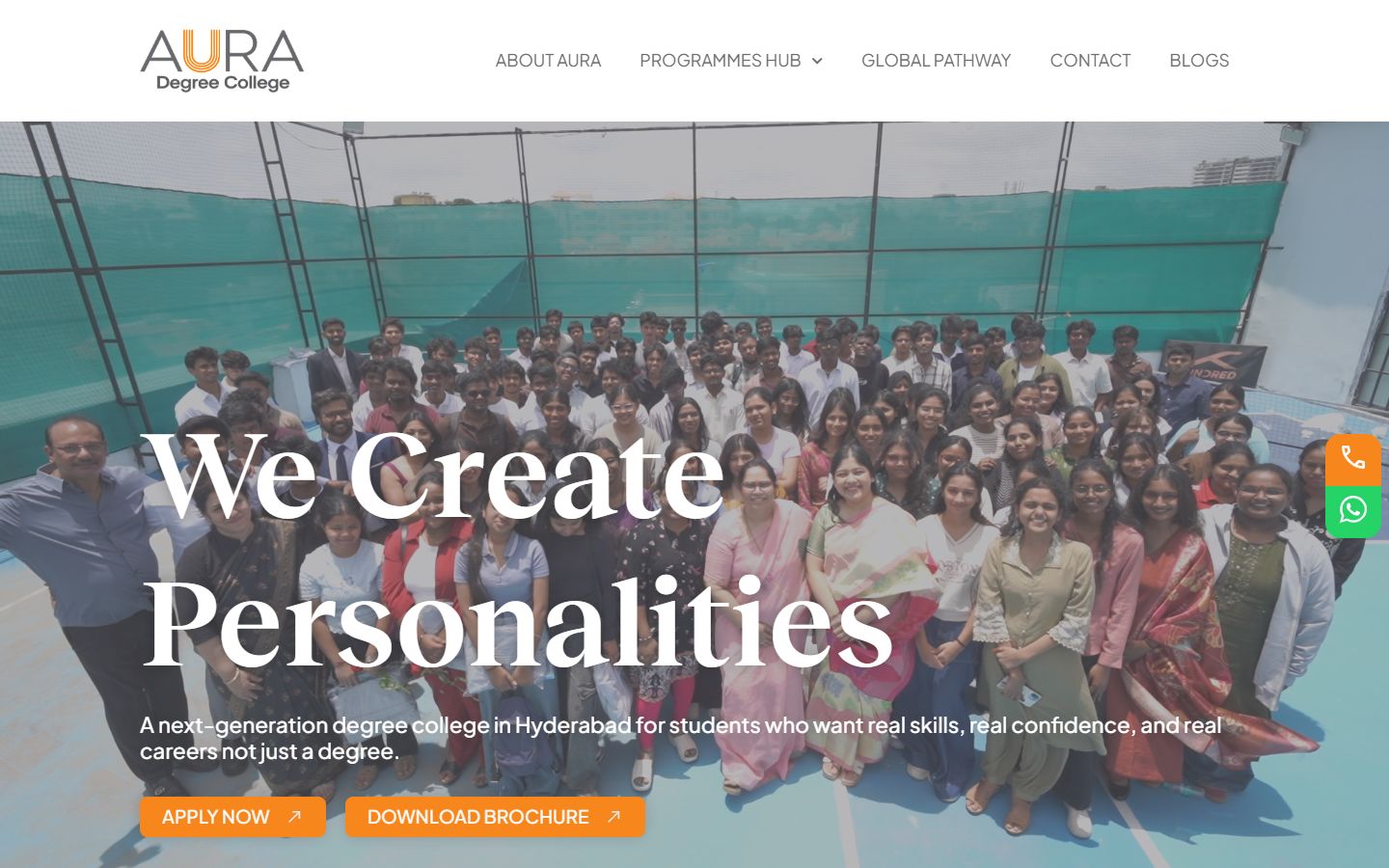
- Hyderabad and wider India: schools, colleges, clinics and fit-out firms receive WhatsApp enquiries from parents and owners who want quick answers about fees, timings and visits. Our work on admissions sites such as Aura, with counselling and brochure flows, shows how much of the enquiry journey can be planned in advance. See our Hyderabad page for local notes.
- Dubai and the UAE: bilingual replies matter, and so does tone. Answers should read as considered, not robotic. Our Dubai page covers the wider website and enquiry picture.
How does WhatsApp reception connect to the rest of your enquiry system?
It should feed the same CRM as your website form and phone enquiries, so every lead has one record, one owner and one follow-up plan. A WhatsApp bot that lives in its own silo just moves the mess somewhere else.
That is why we treat WhatsApp reception as one part of AI systems and automation, alongside CRM workflows and follow-up. Our guide to lead follow-up automation covers what happens after the first reply.
How do you know if WhatsApp AI reception is working?
Judge it by what happens to enquiries, not by how many messages it sends. Track time to first reply, the share of conversations handed to a person, how often handovers are answered on time, and how many enquiries become booked calls or visits. Read a sample of conversations every week.
Numbers alone can mislead. A bot that answers everything instantly but irritates people will look busy and still lose business. So pair the measures with reading. Each week, open ten conversations at random and ask three questions: was the answer correct, did the customer get what they needed, and did the handover happen at the right moment? Where the answer is no, fix the knowledge, the rules or the wording. After a few weeks, the weekly read becomes quick, and the receptionist becomes something your team trusts rather than something they work around.
What to do next
Export last month's WhatsApp conversations, or simply scroll through them, and sort the first messages into three groups: questions with a standard answer, enquiries that need qualifying, and conversations that needed real judgement. The first two groups are your automation scope. The third is your handover list.
Then book a call. We will map your enquiry flow with you and show where an AI receptionist would help, and where it should step aside.
What to take away
- Automate the repeatable: greetings, FAQs, qualification, booking and routing.
- Keep judgement human: negotiation, complaints, sensitive or unusual cases.
- Answer only from approved content, and say when a person will reply.
- Use the WhatsApp Business Platform with opt-in and approved templates.
- Log every conversation so nothing depends on one person's phone.
Built on Intent studio. A founder-led studio in India that plans and builds websites, search and AI visibility, and AI systems for businesses in India, the UAE and the UK. Reviewed by [Founder name], founder. We do not publish invented numbers; where a figure appears, its source is named in the sentence.
How the studio works